


A blowout in oil drilling is an uncontrolled release of crude oil, natural gas, or other reservoir fluids from a well to the surface — occurring when downhole pressure exceeds the ability of the wellbore control system to contain it. It is the most dangerous and costly type of well control failure in the petroleum industry, capable of causing immediate loss of life, catastrophic fire, long-term environmental contamination, and economic losses measured in the billions of dollars.
The term "blowout" describes a specific failure mode: not simply a leak or a spill, but a sudden, forceful, and uncontrolled expulsion of subsurface fluids driven by formation pressure. In a functioning well, the weight of the drilling fluid (mud) in the wellbore counterbalances the natural pressure of oil and gas in the rock formation below. When that balance fails — whether through human error, equipment malfunction, or unexpected geological conditions — the formation pressure wins, and a blowout occurs.
According to the International Association of Drilling Contractors (IADC), the global oil and gas industry recorded an average of 20 to 40 significant well control incidents annually in the decade preceding 2020, with full blowouts representing the most severe subset of those events. While major blowouts are statistically rare relative to the total number of wells drilled worldwide each year — approximately 60,000 new wells per year globally, according to the U.S. Energy Information Administration — their consequences when they do occur are disproportionately severe.
This article explains what a blowout in oil is at a mechanical and geological level, what causes them, how the industry works to prevent them, and what happens when prevention fails — illustrated by specific historical examples that shaped modern well control practice.
How a Blowout in Oil Drilling Happens: The Mechanics
An oil well blowout is the result of a pressure imbalance in the wellbore — specifically, a situation where formation pore pressure exceeds both the hydrostatic pressure of the drilling fluid column and the secondary containment provided by the blowout preventer (BOP) stack.
Under normal drilling conditions, the wellbore pressure balance works as follows:
- Formation pore pressure: The natural pressure of fluids (oil, gas, water) trapped within the pores and fractures of reservoir rock. In deep offshore wells, this can exceed 20,000 PSI (pounds per square inch).
- Hydrostatic pressure of drilling mud: The weight of the column of drilling fluid in the wellbore exerts downward pressure on the formation, counteracting pore pressure. Drillers adjust mud weight (measured in pounds per gallon, ppg) to maintain a slight overbalance — typically 100–200 PSI above formation pressure.
- Wellbore mechanical barriers: Steel casing cemented into the wellbore at intervals provides structural containment, and the BOP stack at surface provides the final mechanical barrier against uncontrolled flow.
A blowout occurs when this system fails in sequence:
- A kick occurs: Formation fluids enter the wellbore because the mud weight is insufficient to contain pore pressure. A kick is not yet a blowout — it is the warning sign. Drillers detect kicks by monitoring mud returns: an unexpected increase in mud pit volume means formation fluid is inflowing.
- The kick is not detected or not circulated out in time: If the influx of gas or oil is not recognized quickly and the well is not shut in (closed) using the BOP, the lighter formation fluids rise in the wellbore, reducing the hydrostatic pressure of the mud column further as they ascend — creating a self-reinforcing cycle of pressure reduction and further influx.
- The BOP fails to contain the well: Either the BOP is not activated, activates too late, or fails mechanically. Once the BOP fails or is bypassed, there is no remaining barrier between the formation pressure and the surface.
- Blowout occurs: Formation fluids reach the surface at full formation pressure, expelling drilling fluid, equipment, and themselves into the atmosphere or, in offshore wells, into the ocean.
The speed of this sequence can be alarming. A deepwater well kick that is not detected within minutes can escalate to a full blowout in under 30 minutes, according to well control training data from the International Well Control Forum (IWCF).
What Causes an Oil Well Blowout?
Oil well blowouts are caused by a combination of geological, mechanical, and human factors — and in the majority of documented major blowouts, the investigation finds failures at multiple levels rather than a single cause. A comprehensive analysis of blowout incidents by the IADC Well Control Committee identified the following primary contributing factors:
| Cause Category | Specific Failure | Frequency in Blowout Investigations |
| Human / procedural error | Failure to detect kick, improper mud weight, skipped safety protocols | Cited in approximately 70% of blowouts (IADC) |
| BOP equipment failure | Shear rams fail to cut drill pipe, hydraulic system failure, valve leak | Cited in approximately 40% of major blowouts |
| Unexpected formation pressure | Overpressured zone not predicted by seismic or offset well data | Cited in approximately 25% of blowouts |
| Cementing failure | Poor cement bond allows gas migration behind casing | Cited in approximately 30% of blowouts |
| Organizational / management pressure | Schedule pressure leading to skipped well integrity tests | Documented in several landmark investigations |
Table 1: Primary causes of oil well blowouts and their frequency in incident investigations (Source: International Association of Drilling Contractors Well Control Committee data)
Surface vs. Underground Blowouts
Not all oil well blowouts reach the surface. An underground blowout occurs when reservoir fluids migrate from a high-pressure zone to a lower-pressure zone through the annular space between the casing and the formation — without ever reaching the wellhead. Underground blowouts can be harder to detect but can destabilize the wellbore structurally and cause subsurface environmental contamination.
A surface blowout — the more commonly understood type — produces the dramatic visual of a geyser of oil, gas, mud, and debris erupting from the wellhead, often igniting into a well fire that can burn for days, weeks, or months.
What Are the Consequences of an Oil Well Blowout?
The consequences of an oil blowout span four interconnected domains — human safety, environmental damage, economic loss, and regulatory response — and in major incidents, all four are severe simultaneously.
Human Safety
Blowouts are the leading cause of fatality in drilling operations. When a well blows out and gas ignites, the resulting explosion and fire can be instantaneous and fatal to personnel within the immediate blast radius. The 2010 Deepwater Horizon disaster killed 11 workers in the initial explosion — an event that remains the deadliest offshore drilling accident in U.S. history, according to the U.S. Chemical Safety and Hazard Investigation Board (CSB). Even non-ignited blowouts present immediate danger from the kinetic energy of expelled debris, hydrogen sulfide (H2S) gas toxicity, and the structural collapse of drilling equipment.
Environmental Impact
Oil blowouts produce some of the largest acute environmental contamination events in industrial history. The 2010 Deepwater Horizon blowout released an estimated 4.9 million barrels (approximately 210 million gallons) of crude oil into the Gulf of Mexico before the well was capped 87 days later, according to the U.S. Flow Rate Technical Group. The spill contaminated approximately 1,300 miles of U.S. coastline, killed an estimated 1 million seabirds and over 100,000 marine mammals, and caused ecosystem damage still being documented over a decade later (National Oceanic and Atmospheric Administration, 2020).
Land-based blowouts produce concentrated soil and groundwater contamination at the well site, and the oil fire byproducts — black carbon, sulfur dioxide, and volatile organic compounds — create significant air quality impacts in the surrounding region. The 1991 Kuwaiti oil well fires, triggered by deliberate sabotage during the Gulf War, released an estimated 1.5 billion barrels of oil equivalent in smoke and combustion products, according to the U.S. Geological Survey, creating a regional atmospheric pollution event visible from satellite imagery.
Economic Consequences
The economic cost of a major oil well blowout is staggering and multi-layered. Direct costs include well capping and relief well drilling, asset loss, environmental remediation, and legal settlements. Indirect costs include production revenue loss, insurance premium increases across the industry, and regulatory compliance costs for the wider sector.
The Deepwater Horizon disaster ultimately cost its operator over $65 billion in total liabilities — including a $20.8 billion Clean Water Act settlement with the U.S. Department of Justice in 2015, the largest environmental settlement in U.S. history. The rig itself, valued at approximately $560 million, was a total loss. Production from the broader Gulf of Mexico was disrupted for months following the imposition of a federal drilling moratorium.
How the Oil Industry Prevents Blowouts: Well Control Systems
Blowout prevention in modern drilling relies on a layered system of barriers — the philosophy that no single point of failure should be able to cause a blowout if all other elements of the system function correctly.
The Blowout Preventer (BOP): The Primary Mechanical Barrier
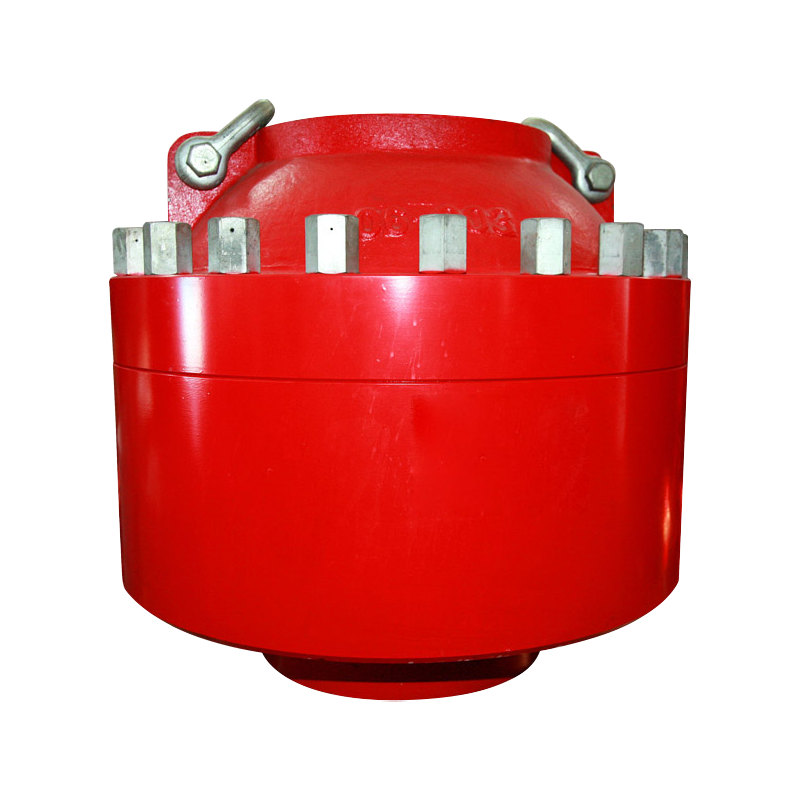
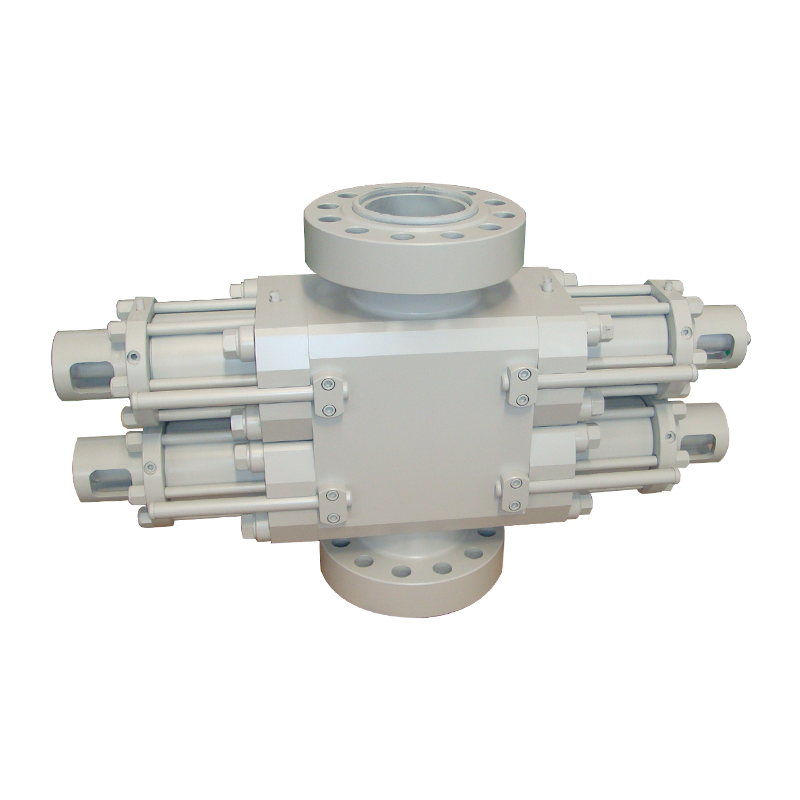
The blowout preventer is a large, high-pressure valve assembly installed at the top of the wellbore — at the surface for land wells, and at the seafloor for deepwater offshore wells. A BOP stack typically contains multiple independently operated components:
- Annular preventer: A rubber packing element that can seal around any shape of pipe — or seal the open hole entirely — by hydraulically squeezing inward. It is the first-response closure device, able to close on virtually any configuration in the wellbore.
- Pipe rams: Steel rams that close around the drill string, sealing the annular space between the pipe and the wellbore wall. Pipe rams are matched to the specific pipe diameter being used.
- Blind/shear rams: The last-resort mechanical barrier — hardened steel blades that close completely across the wellbore, cutting through the drill string if necessary and sealing the well. Modern deepwater shear rams must be able to cut through tool joints and other hardware, requirements strengthened significantly after the Deepwater Horizon inquiry.
Modern deepwater BOP stacks can weigh over 400 tonnes and stand over 15 meters tall, containing up to six individual closing elements. They are pressure-rated to match the maximum anticipated wellbore pressure — in deepwater Gulf of Mexico operations, BOPs are typically rated to 15,000 PSI or above (Bureau of Safety and Environmental Enforcement, 2016).
Mud Weight Management: The Primary Fluid Barrier
Proper drilling fluid (mud) weight management is the first line of defense against a blowout — it is far more effective and less costly to prevent a kick than to shut in a well after one has occurred.
Mud engineers continuously monitor and adjust the density of drilling fluid, measured in pounds per gallon (ppg). Typical drilling mud weight ranges from 8.5 ppg (freshwater baseline) to 18 ppg or higher in high-pressure formations. Maintaining the correct mud weight requires accurate pore pressure prediction from pre-drill seismic analysis, offset well data, and real-time measurements while drilling (MWD/LWD — Measurement/Logging While Drilling tools).
Too-light mud causes a kick; too-heavy mud can fracture the formation (lost circulation) — also a serious well control problem that can indirectly lead to a blowout by reducing the effective mud column height.
Well Casing and Cementing: The Structural Barrier
Steel casing strings are run into the wellbore at intervals and cemented in place, creating a series of concentric steel-and-cement cylinders that isolate the wellbore from the surrounding formation and from each other. A properly designed and executed casing program ensures that even if the primary fluid barrier (mud) fails, the structural barriers provide redundancy. The cementing job quality is verified by cement bond logs — acoustic measurements that confirm whether the cement has bonded effectively to both the casing and the formation. Poor cement bonding — as was found in the post-incident analysis of the Deepwater Horizon well by the National Commission on the BP Deepwater Horizon Oil Spill — creates a migration pathway for gas behind the casing that bypasses the BOP entirely.
Onshore vs. Offshore Oil Blowouts: Key Differences
While the underlying mechanics of an oil blowout are the same on land and at sea, the operational context, consequences, and response options differ significantly between onshore and offshore environments.
| Factor | Onshore Blowout | Offshore Blowout |
| BOP location | At surface (wellhead) | On seabed (subsea BOP stack) |
| Response access | Direct access for well control teams | Requires ROVs and specialized deepwater equipment |
| Environmental spread | Contained to surface area; groundwater risk | Ocean current dispersal over thousands of square miles |
| Relief well drilling time | Days to weeks | Months (Deepwater Horizon: 87 days) |
| Evacuation options | Personnel can move away from site quickly | Limited to lifeboats and helicopters from platform |
| Typical pressure range | 1,000–10,000 PSI | 5,000–20,000+ PSI |
Table 2: Comparison of onshore vs. offshore oil well blowouts across key operational, environmental, and response factors
How Is an Oil Well Blowout Stopped?
Stopping an active oil well blowout is one of the most technically demanding emergency response operations in the industrial world — there is no single universal method, and the approach depends on whether the well is on fire, the depth and type of blowout, and the mechanical condition of the wellbore.
- Dynamic kill (bullheading): Pumping heavy drilling mud or cement down the wellbore at high pressure to overcome the formation pressure and halt the flow. This is the fastest method when the wellhead is accessible and the wellbore is intact. Effectiveness depends on having sufficient pump pressure to exceed formation pressure at the point of influx.
- Capping stack: A specialized BOP assembly that can be installed over a damaged or destroyed wellhead to restore mechanical closure of the well. Capping stacks became prominent after the Deepwater Horizon response — the capping stack installed on that well on July 15, 2010 halted the flow after 87 days, though the well was not permanently killed until the relief wells were completed.
- Relief well drilling: Drilling a new, deviated wellbore from a nearby location to intersect the blowing well at depth, then pumping kill-weight fluid into the formation to permanently balance the reservoir pressure. Relief well drilling is the definitive method for wells that cannot be killed from the top — but takes weeks to months to complete. The Deepwater Horizon relief wells were drilled simultaneously, with the first intersection achieved on September 17, 2010, 152 days after the blowout began.
- Firefighting and burnoff: For ignited blowouts, controlling the fire — rather than extinguishing it immediately — is often the preferred initial strategy because a burning well is not spreading liquid oil to the surroundings. Specialist well control teams use large-volume water jets and sometimes explosives to extinguish the flame, after which the well can be capped.
How Major Blowouts Changed Oil Drilling Regulations
Every significant oil well blowout has produced regulatory change — often overdue reforms that the industry resisted until a catastrophe made them politically and legally unavoidable.
| Blowout Event | Year | Key Regulatory Outcome |
| Santa Barbara Channel blowout (USA) | 1969 | Catalyzed the U.S. National Environmental Policy Act (NEPA) and Clean Water Act; triggered public environmental movement |
| Ixtoc I blowout (Mexico) | 1979–1980 | Strengthened international oil spill response protocols; exposed limits of existing capping technology |
| Piper Alpha explosion (UK North Sea) | 1988 | Led to the Cullen Inquiry; transformed UK offshore safety regulation; mandatory Safety Cases for all platforms |
| Deepwater Horizon (USA Gulf of Mexico) | 2010 | BSEE created; new BOP testing/certification rules; Well Control Rule (2016); enhanced cementing standards |
Table 3: Major oil well blowout events and their lasting regulatory impact on the global petroleum industry
Frequently Asked Questions About Oil Blowouts
What is the difference between a kick and a blowout in oil drilling?
A kick is an influx of formation fluids (oil, gas, or water) into the wellbore when formation pressure exceeds the hydrostatic pressure of the drilling fluid. A kick is a warning event — it is detected, responded to, and circulated out safely in the vast majority of cases. A blowout in oil is what happens when a kick is not controlled — when the influx is not detected in time, the well is not shut in properly, or the BOP fails to contain the well. All blowouts begin as kicks; only a small fraction of kicks escalate to blowouts.
How long can an oil well blowout last?
The duration of an oil well blowout varies enormously depending on the method available to control it and the reservoir characteristics. Some blowouts on land are killed within hours using dynamic kill techniques. Others have persisted for months or years: the Ixtoc I blowout in the Gulf of Mexico lasted 290 days (June 1979 to March 1980) before two relief wells intersected and killed it — releasing an estimated 3.3 million barrels of oil, according to NOAA. The Kuwaiti oil fires of 1991 burned for approximately 10 months before the last fire was extinguished in November 1991.
Can a blowout happen at a producing well, or only during drilling?
Blowouts can occur at any stage of a well's life — during drilling, completion, workover operations, or even at a producing well. Workover blowouts (occurring during well maintenance or intervention on existing producing wells) are actually a significant category of incident. In a workover, barriers that were in place during the original well construction may have been removed or compromised, and the operations team may be under pressure to minimize downtime. The International Well Control Forum tracks workover incidents as a separate category precisely because the risk profile differs from primary drilling operations.
What is a wild well in oil terminology?
A wild well is the industry term for an oil or gas well that is out of control — whether it is actively blowing out, on fire, or in an uncontrolled state that prevents normal operations. The term is used by specialist well control companies that are contracted to bring wild wells back under control. It is synonymous with a blowout in common usage, though technically a wild well may refer to any well that cannot be safely operated or shut in, not exclusively a full surface blowout.
Are oil blowouts becoming more or less common?
The frequency of major oil well blowouts has declined significantly over the past four decades, driven by improvements in BOP technology, mud monitoring systems, well control training certification requirements, and regulatory oversight. The IADC reports that serious well control incidents (per well drilled) have fallen by more than 60% since the 1980s. However, the increasing complexity of deepwater and high-pressure/high-temperature (HPHT) wells has introduced new risk dimensions that offset some of those gains. Industry consensus is that blowout risk is lower per operation than historically, but the consequence of a failure in extreme environments is greater than ever.
What qualifications are required to work in well control?
Internationally, well control competency is certified primarily through two bodies: the International Well Control Forum (IWCF) and the IADC WellSharp program in North America. Both require classroom and simulator-based training followed by written and practical examinations. Certifications are tiered by role — from driller level to well site supervisor and company man level — and must be renewed every two years. Many national regulatory bodies and major operators require current IWCF or IADC certification as a condition of working on any well, with deepwater and HPHT operations typically requiring the highest certification level.
A blowout in oil drilling represents the convergence of geological forces, mechanical systems, and human decision-making under pressure — and when any element of that system fails at the wrong moment, the consequences extend far beyond the wellbore itself. The modern petroleum industry has made enormous progress in blowout prevention through better technology, more rigorous training, and stronger regulation. But as long as wells are drilled into high-pressure reservoirs, the possibility of a blowout cannot be entirely eliminated — only managed, monitored, and mitigated through constant vigilance and layered defenses.
Understanding what an oil blowout is, how it happens, and what it costs when it does is essential knowledge not just for drilling engineers and well control specialists, but for anyone seeking to understand the genuine risks and responsibilities that come with extracting oil and gas from the earth.
 +86-0515-88429333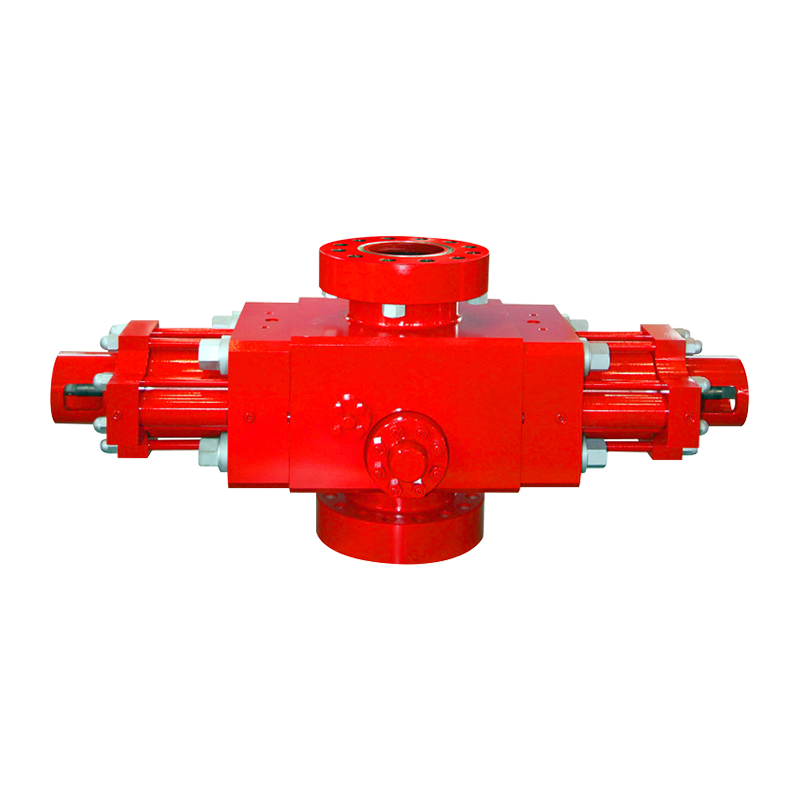
 BİZE ULAŞIN
